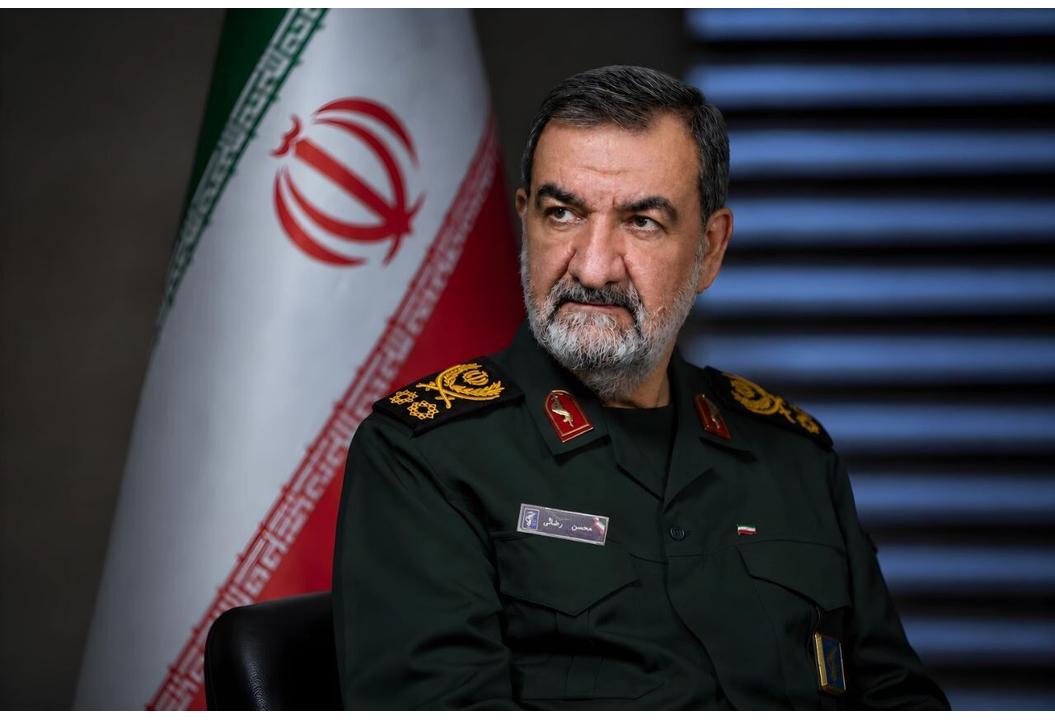
In an interview with ‘Drop Site’, a Washington-based news website, Major General Mohsen Rezaei, responding to a question on Strait of Hormuz, said: The management of Hormuz is a national asset for us, and this is not simply about collecting tolls.
“If diplomacy can bring about that understanding, we prefer diplomacy. But if the war continues, Iran has the tools to respond,” he clarified.
“The main issue is security. Charges can also be collected for security, insurance and environmental costs, but the importance of managing the strait goes far beyond the revenue it generates,” he said. “We will continue managing it to maintain peace and security in the region, and we will not back down from this position.”
Responding to a question about the reason why Islamabad MoU failed, Rezaei said: The first memorandum failed because the commitments were implemented in the wrong order. We opened the strait and maritime traffic resumed, but the other side’s political and economic commitments were not implemented in a way that could sustain the agreement. Once the United States obtained what it immediately needed, the balance of leverage shifted. That experience matters to us.
“We will not return to our previous approach to diplomacy, but we will not abandon diplomacy either. We have presented seven new conditions through intermediaries. Until those conditions are fulfilled, Iran will neither reopen the strait nor return to negotiations,” he further added.
The official emphasized that Iran is no longer interested in agreements that are guaranteed solely by political goodwill. “Thus, Hormuz is not just a topic of the deal; it is also part of the guarantee for its implementation,” he added.
“If Washington honors its commitments, there is a path to reopening the Strait of Hormuz and continuing diplomacy,” he stressed. “But Iran will not first give up the leverage that brought the other side to the negotiating table and then wait to see whether its promises are fulfilled.”
Responding to a question regarding Iran’s position on the Persian Gulf region, the Major General said: We are holding talks with the Persian Gulf Cooperation Council countries about what kind of regional security architecture can prevent the Persian Gulf from once again becoming a scene of confrontation between Iran and powers from outside the region.
“Our position is that the security of the Persian Gulf cannot be outsourced forever,” he stressed.
Rezaei further explained that all countries around the Persian Gulf have a direct interest in the security of the region.
“The reopening of the Strait of Hormuz and the creation of a broader security architecture for the Persian Gulf are not a single decision. The reopening of the Strait still depends on the implementation of the conditions Iran has announced to the United States. Talks with the Persian Gulf Cooperation Council can prepare the structure surrounding that decision, but they are not a substitute for it.”
Regarding Iran’s missile and drone capacity, the top security official clarified that the country still has capacity to continue launching missiles and drones at various targets.
“Iran has invested for years in building redundancy into these capabilities: dispersed production, underground facilities, different launch systems and the ability to repair damage and replace losses,” Rezaei said. “More importantly, you should not assess our capacity solely by asking how many missiles remain in storage. In a prolonged war, the central question is whether a country can sustain a continuous cycle of production, deployment and response. We have shown that, even months after the war began, we can still impose costs on the other side.”
1723**2050